March 2, 2016

From Justin to Donald


I blame Justin Guarini.

OK, not directly. But if you want to figure out how we got here, how it’s possible to have gotten to a place where the race to become the next President of the United States has essentially whittled itself down to five candidates, and the one with the most momentum is Donald Trump – it starts with the kid from Philadelphia (ironically, also with interesting hair) who sang Stevie Wonder on stage in front of an acerbic British judge.

On September 11, 2001, many Americans lost their lives – and just about every one of us lost our sense of security. Real or imaginary though it might have been before then, after planes took down the towers, we were all walking around in a daze, feeling like we had absolutely no control over anything anymore. And the chance to escape the mayhem and madness for even a short while by losing yourself in a television program was nearly impossible because 24/7 news coverage on every single channel was suddenly the new normal.

Which brings us to American Idol. Yes, Survivor had already introduced the concept of a reality competition program to the airwaves, but as fascinating as that program was, it was all self-contained. Viewers had their favorites, but it was still a passive enterprise, watching as contestant after contestant got voted out exclusively by the players on the show itself. Idol changed all that. It was a stroke of brilliance. On Idol, the judges would have their say, but eliminations would be done by a popular vote of the viewing audience.

And people got involved and took ownership of these contestants. When you called in and placed your vote for LaToya, and she made it to the next show, you won, too. When Nikki was sent packing in spite of your support, you took the loss personally.

Eventually, there was just Justin and Kelly left. And over 22 million viewers tuned in to see who would emerge victorious. 15.5 million votes were cast in the Season 1 finale. Justin lost, but somewhere along the course of his journey to temporary stardom, he had a moment where the judges gave him some critical feedback, and he didn’t just accept it like everybody else had done previously. Instead, he asked the audience, “What do YOU think?” 

He was the first contestant to realize that who the judges thought should win didn’t matter. This wasn’t, in fact, a competition to find the best singer. Host Ryan Seacrest has continued to make that clear each and every week over the show’s 15 seasons. “Vote for your favorite,” he implores. “Worthiness be damned,” is implied. Justin knew. The only thing that matters is to get people invested enough in you to vote for you to stay.

Since that first season in 2002, America has gotten more and more used to the then novel concept of being able to influence the results of what they see on television. We’ve had X Factor, America’s Got Talent, So You Think You Can Dance, The Voice, and so on and so on. “Vote for your favorite, worthiness be damned.” And with the rise of the Internet giving birth to a culture of trolls – by no means the majority, but a large segment nonetheless – it was just a matter of time before the process got hijacked.

“Vote for the Worst” was a website that understood that if Idol was simply going to eliminate the contestant with the lowest vote total, they could rally people around a single contestant and ensure that he or she would not finish last in any given week, by sheer brute force of numbers. And what better way to taunt those people who truly were invested in the outcome of this show than to create a voting bloc of otherwise disinterested parties to keep the singer they felt least worthy of winning the whole shebang in the mix for as long as possible.

Countless bodies fell in the wake of the likes of Sanjaya Malakar, Anthony Federov and John Stevens.

And all along the way, the audition process morphed from the stated goal of “finding the next pop superstar” to “finding the most delusional people we can string along and mock and take delight in their inability to recognize their own lack of talent.” And the ratings grew and grew. And the contestants sassed back more – and by doing so, endeared themselves to “Vote for the Worst” and got more votes and advanced further and further in the competition. It ultimately reached the point where the non-Worsters changed the way they voted. They started voting for the contestants they thought had the least chance of going home quickly, not because they liked them per se (or even at all). They just wanted the Sanjayas to go away.

At its peak, in the Season 8 finale (2009) between Kris Allen and Adam Lambert, Idol announced that over 100 million votes were cast. And while the actual breakdown of the final vote tally was never revealed, it’s probably safe to say that Allen won in blowout fashion, potentially with as many as 70 million votes. Take a quick look at the official voting results from the 2008 Presidential Election and do a mental comparison. Barack Obama received around 69 million votes to defeat John McCain. Out of a total of just 131 million votes.

How did we get here? 9/11 changed the way television news operated. A constant crawl across the bottom of the screen had to grab viewer interest. And programming needed to exist all the time. So when there was no news to be shown, opinion shows began to flourish. Capitalizing on the advances in viewer voting that Idol had inspired, audiences were constantly being polled and those results were reported as if it was important information. And those unscientific poll results impacted subsequent poll results and the tail began to wag the dog – not on meaningless subjects like who sang that lame Kara DioGuardi-penned pop pastiche better, but on whether or not gun control was a good idea.

Slowly but surely, news channels morphed into entertainment channels and competition for ratings began to supersede actual reporting and impartiality. Debates were treated as football games, complete with sideline reporters, telestrators and hours-long pre- and post-game analysis. Politicians were no longer taken to task on the issues, but rather their speeches were whittled down into easily-digestible sound bites. Viewers asked to vote on which candidate was their favorite, worthiness be damned. American Idol, American President – it’s all the same now.

Sass the moderators of the debate – and there will be weeks and weeks of debates – and you’ll advance to the next round. And a certain portion of the audience will vote for you just to make sure you stick around to entertain them a bit longer. And who better to capitalize on all of this madness than Donald Trump, a veteran of the reality show world thanks to his “Apprentice” empire?

Is it any wonder that a show that garnered popularity precisely because its eliminations were based on the ephemeral whim of a dictator (strangely enough, a welcome counterpoint to the viewer vote format that had been corrupted by “Vote for the Worst” inspired anti-voters) would create such a cult of personality? Quite frankly, it was inevitable.

The question now is, going forward, how do we stop this avalanche?

For one, we have to start voting FOR something rather than AGAINST something else. When I see Trump supporters asked WHY they are voting for him, the answer almost always takes some form of “Well, Hillary… Cruz would...” When I hear Clinton supporters asked WHY they are voting for her, the answer almost always takes some form of “Well, Bernie… Trump would...” Those aren’t reasons. They’re excuses. And they very nicely achieve the goal of deflecting the original question and thus allowing you to avoid hearing an opposing point of view.

People need to get out of their echo chamber and stop treating knowledge as if it’s something to be mocked. We need to stop unfriending people on Facebook and blocking them on Twitter as a knee-jerk reaction for having the audacity to offer up a contrary opinion on your point of view or to simply ask a question about something we’ve stated. (And alternatively, we need to not respond to a post like “So proud of my kid for making the honor roll” with some sort of diatribe on how “if so-and-so is elected, our schools will get even worse than they are now” – the correct response is something along the lines of “Congrats!”)

And, going forward, once November passes, how about we all stop watching the likes of FOX News and MSNBC?  Idol is going off the air. Why? People stopped watching. Yes, there’s going to be a bump this season’s ratings thanks to nostalgia and the fact that, but it is going away. Stop watching. It goes away. And yeah, I’m sure there will be an inevitable comeback attempt in a few years’ time – but if so, it will come back changed. When the ratings go away, these channels will also change. The way they cover the news will change. And one can only hope that, as a result, the types of candidates who gain traction will also change.

Of course, the way we vote is still first and foremost going to be, to borrow a phrase, HUUUUUUGE.  So let’s start to change that as well. Vote FOR someone, rather than against – even if the current process has handcuffed us a bit into being forced into the lesser of two evils. Find a way to connect with a candidate on something, even if you have to couch it in the context of negatives of the alternative. But assert it positively, because if we only talk in the negative, this is going to be an election between Mrs. Benghazi Email Criminal and Mr. Build a Wall Deport Muslims. And that’s only going to inspire less voter participation and the greater likelihood that the extreme and the uneducated among us will be able to steer the ship.

As Justin Guarini sang in the Season 1 finale: “There are hills and mountains between us. Always something to get over… I don't care how you get here, just get here if you can.”


August 20, 2012

Welcome to Herschel's Farm

Here's my 2012 fantasy football logo, submitted for your approval.


Everybody look out! We've got ourselves another Walker!

June 13, 2012

Not Enough Time In A Day

I wish I had more time to devote to this blog on a regular basis, but sadly, between my ESPN duties, the advice I give (gladly) on Twitter, the attempt-in-progress to get a taker for my second book, throwing in family responsibilities on top of all of that... well, something has to give. 

Typically, it's the blog that ends up falling through the cracks, especially when the lack of downtime leads to a lack of creativity in terms of figuring out exactly what topic to wax poetic about... 

I'm open to suggestions, so if you have any topics that you'd like me to address or movies you'd like me to review, things of that nature (outside of the world of sports, of course -- that's my other gig) -- feel free to offer them up in the comment field below and I'll see what I can do.

I also want to draw your attention to the DONATE button I've added to the blog to the right of this post. Believe it or not, this is at the request of a few Twitter followers who wished to "give back something" for all the advice I've given them. 

While I give my advice freely and without expecting anything in return, I would be foolish not to do the math and realize that if even 10 percent of my followers donated just $1/month, I'd be able to save up enough money to perhaps self-publish my next tome on my own.

Hey, it's worth a try! No pressure... you could always just find Sally Struthers and send it to her instead. 

By the way, have I mentioned how nice you all look today? Have you lost weight? 


June 5, 2012

Blocked, Not Shocked


In my last post, I offered my two cents on the whole Rebecca Watson-DJ Grothe feud. 

While I didn't expect everyone to agree with me, I certainly hoped that anyone who read what I wrote, both in the blog post itself and in the comments beneath it would see that I am far from a Watson-hater. 

In fact, I agree with much of what she has had to say, and while I think much of Grothe has argued is equally valid, I fully support Watson's decision to not attend TAM. 

I would have thought, however, that Watson had a thicker skin than to block me from her Twitter feed after the following exchange. Watson had posted a link about the King and Queen of Norway being required by law to be members of the Evangelical Lutheran Church. 

Clearly in a playful mood, she followed up with a whimsical tweet, which I responded to in the hopes that she had a sense of humor about herself. Clearly, she does not... 


Yes, this tweet elicited no smiles, chuckles or guffaws, but rather a "block" from Rebecca Watson. 

Look, I get she might not have found it funny. But I meant it in good spirits. However, it goes to prove my point that when you read something, it often leads to misconceptions about the intent of the statement. And the only way to know for sure is to ask, not to cut off communication. 

Watson doesn't know me, so she doesn't owe me anything. If she took it the "wrong way" so be it. However I would have hoped that as someone who is upset that her own printed words were taken to mean something that she did not intend, that she would be a little slower on the trigger finger to judge others. 

Food for thought...

June 4, 2012

Elementary, My Dear

Back when I was in college, I took an Intro to Psychology course in order to fulfill my core requirements.

As part of the class, all students had to sign up for and take part in a number of "experiments" being conducted by more advanced students in the department. Naturally, the time commitment involved in each of these tasks varied as did (as I discovered) the quality of the subterfuge involved in accumulated data.

For example, one of the tasks required me to answer some questions about my personal views on a topic which I don't recall exactly, but it was probably along the lines of teen drinking and whether the legal age should be lowered or not.

After taking a look at my answers on the survey, I was placed in a private room and told in about fifteen minutes, I would be asked to debate my views with a professor and would be asked to take the contrary position to his, which happened to be pretty much in line with my response to the survey.

They also gave me a research package to study to help me shape my remarks, and the upshot of all of this was that after the fifteen minutes had elapsed, they told me the professor was not available after all, but would I mind taking an additional survey in order to get credit for volunteering?

The survey was similar to the original one, and the upshot of the whole experiment, I gathered, was they wanted to see if my opinion would change after being told I had to advocate the other side and was given all sorts of information that countered my pre-existing point of view.

Perhaps if I actually believed for an instance the scenario I was placed in I would have been a good subject, but as I never once truly thought that I would have to go through with the debate, the whole exercise seemed worthless to me.

In fact, the last thing they asked me was whether or not I believed the scenario, and when I said I did not, they thanked me for my time (and honesty) and said they couldn't use my data.


File:RANDI.jpg
WWRD?

The "easiest" way to fulfill the obligation to volunteer for experiments was to take part in a survey. You'd go in, answer a few questions, and then you'd be done. These tended to fill up quickly, however, and I was only able to sign up for one such activity, one that was only open to males.

As it turns out, this survey dealt with the male attitude towards women. It was around 100 statements long. For each one, we were told to put a number from 1 (strongly disagree) to 5 (strongly agree) that corresponded to our level of agreement with the statement.

And so, I quickly worked my way through the document, strongly agreeing with sentences like "Women should be paid the same as men for doing the same job" and strongly disagreeing with "When a man sees a girl dressed in a way that turns him on that means she wants him to make sexual advances."

Then I got to a statement that simply left me flummoxed: "Any woman can be raped."

I had no idea how to respond to that question, because I couldn't figure out the context of what exactly the statement was trying to say. Obviously, if it meant that it was "It is OK for any woman to be raped" then the clear only answer that should be selected is "1 - strongly disagree."

However, given some of the surrounding sentences, I suspected that perhaps what was really being asked was if there was a certain kind of woman who was "immune" from rape. In other words, I thought the intention of the statement might have been better phrased as "It is possible for any woman to be raped." 

If that were the case, then the answer would have to be (sadly) "5 - strongly agree."

When I went up to the proctor of the survey to ask for clarification, he said he wasn't allowed to give me any, nor could I leave it blank and receive credit.

Since it was anonymous, though, I had a pretty good sense that failing to answer that question would not result in any repercussion, I did leave it blank rather than skew the data in a way that (due to the ambiguity I perceived) didn't represent my world view.

But all these years later, I still think back to that survey whenever I am witness to an argument between two people who appear to be at war over an issue on which they actually are on the same side, but due to a similar seeming ambiguity in something one of them said, battle lines have been drawn.

Imagine the following exchange:

Person A: Women who attend conferences like yours are not safe from sexual assault. Agree or disagree?

Person B: If by not safe you mean that it is possible for sexual assault to take place, then I agree. If by not safe you mean that the mere act of attending our conference makes it more likely that they will be sexually assaulted, then, I disagree. I worry that the way you phrase the statement may lead people to think the latter is true.

Person A: How dare you blame ME for the problem and not those who would commit sexual assault in the first place. I am not a liar! These things happen! I am not going to your conference. I do not feel safe.

While not exactly the conversation that is going on, that's my humble view of the current kerfuffle between Rebecca Watson and DJ Grothe, in the simplest of terms. It saddens me that these two people, and the supporters of each who have lined up on both sides, all seem to agree that sexual assault is a bad thing and should be eliminated. Yet rather than continue a dialogue on the real issue, the bile and hatred directed at each side by the other that I'm witnessing dismays me. 

All I can say is, I'm done with this survey and will be leaving my answer to this question blank. 

March 20, 2012

Done in 60 Minutes - Volume 1

Here's the first in what I hope to be a series of crossword puzzles that I'm calling "Done in 60 Minutes." Don't worry, it shouldn't take you that long to solve them. That's simply the time limit I'm putting on myself in making them.

I'd be interested to hear your thoughts on what you think, and whether or not you'd like to see more of these in the future.

March 19, 2012

The F in WTF is for Finland

Not quite sure why this video was so popular in Scandinavia in its day, but I know why it's so absolutely hysterical today... for all the wrong reasons. 


And please, can somebody tell me what is going on with that bizarre Terry Gilliam-looking dude silently nodding at the start?

January 13, 2012

Toolshed of Suffering

I love Michael Shermer, and thanks to this presentation, I now have the name for my fantasy baseball team for 2012, which I've used as the title of this post (above.)

Enjoy the rational thought, the Nun Bun and the Nileppez.


January 4, 2012

Really Pat? Really?

Let's give Pat Robertson the benefit of the doubt.

Let's say he does have private conversations with the man upstairs.

This is what he comes up with after a WEEK of talking to him?

A prediction he is "not allowed to share," plagiarism of Abraham Lincoln and a game of 20 questions...

How does this man have any credibility with anyone?

December 29, 2011

The Customer is Always Right?

Here's a story from my time in the casino trenches... I felt it was appropriate to share after seeing all that footage of over-exuberant holiday shoppers taking things a little bit too far. 

Sometimes the customer needs to be put into their place!


While quality customer service is always expected from the front-line employees at a casino, let’s face it – it’s not always possible to achieve. After all, you can’t follow the age old axiom that “the customer is always right” when a ranting lunatic is trying to convince you that they want their $100 bet at the roulette table returned to them because the dealer took their chip off the winning number in error –especially when there are no $100 chips on the table, even in the “muck” (the large pile of losing chips that is pushed to the side in the clearing away process) making the truth of their claim impossible.

Of course, that kind of “shot taking” – where a scam artist will attempt to trick an inexperienced dealer or floorperson into making an erroneous payout – is commonplace. Most of the time, it can be stopped before it has a chance to start, simply by dealers following “proper procedure” in terms of game protection – placement of the cards, what direction to angle their bodies so they can see cheaters place late bets, the order in which they are supposed to clear chips from a roulette layout, etc. Of course, even the best of the bunch can sometimes make a mistake, as what happened to me one fine day near the end of my eight-hour shift of dealing blackjack.

Blackjack is a game I could deal in my sleep, and quite often did, as I simply turned on my auto-pilot, without any real need to pay attention to what I was doing. Simply put, since most people play “by the book” and you tend to keep the same players on your table for hours on end, a certain “confidence” is formed between the dealer and the gamblers. They recognize you know what you’re doing, so they relax and let you do it. In turn, you know they’re not going to make any “crazy plays” like hitting a hard 17 or standing pat on a 13 against your face card, so you deal without thinking and the time goes by faster.

Honestly, as a dealer when you’re good enough to reach that level of confidence, it shows. Oftentimes in the midst of my “trance” I’d suddenly snap out of it in the middle of making pay-outs, simply because it just “felt wrong” – and I’d know I’d made a mistake, which could have been either in the player’s favor or the house’s favor – my job is to get it right, either way. I’d quickly correct it on the spot, and again, the players’ confidence level in me grew – even to the point that if after I swept the cards away and a player who wasn’t paying close attention to the game would ask me something like “What did I have? Didn’t we push?” I could simply say, “No, I beat you” and they’d shrug and the game would continue. I might not have had any memory of the hand at that point, but I knew I was right, and based on their experience with me, so did they. The issue died there.


In short, shot-takers simply didn’t bother coming to my table – they could see very quickly it wasn’t going to fly.

But on this one occasion, I got caught. I had been dealing to this gentleman, playing alone at the table, for several hours, and he was strictly by the book. He never once varied from basic strategy, and while we didn’t converse, there didn’t seem to be any animosity brewing at the table, even as he started to lose a bit more than we won. However, I let my guard down, just for a split-second, and made a classic “rookie mistake” by “assuming” a hit was forthcoming without waiting for the hand signal.

He had 14. I had an 8 showing. In this situation, you hit since you always assume a face card for the dealer’s down-card. If I have 18, he loses, so he “has to” hit. Of course, I jumped the gun and pulled the next card out of the shoe, which was a King, causing him to break. But before I could even get the card over to his hand, he started shouting at me. “I didn’t say to hit! No hand signal!”

Plain and simple - he got me. I was angry with myself for letting it happen, but hey, it does happen. I immediately told him to relax. I agreed with him. He did not give me a hand signal, so he doesn’t get this card. His hand is still live. I called for the floorperson to come over so I could explain what happened, but she was busy handling an issue at another table, so it would be a few minutes. While we waited, I explained to the player what would happen… by law, we are not allowed to change the order of the cards. So, if he didn’t want the King, that was fine – however, it is the next card out of the shoe. If I needed to hit, then the King would be my card. If I didn’t, then as it was exposed in error, it would be “burned” or moved to the discard rack. He seemed to understand, but the floorperson was still busy, and he was itching to continue gambling, so when the pit boss walked by at this point, I called for his assistance.

I explained the situation to him, and he confirmed with the player that he didn’t want the card. However at this point, the player said he wanted another card. That’s not how the game works. He takes the King or nothing. I could see this was going nowhere, so I suggested to the pit boss that we hurry along the process by exposing my hole card. After all, if I had a 4,5,6,7 or 8 underneath my already-exposed 8, then I’d be forced to draw – meaning I’d get the King, and break. We could pay this guy and move on.  The pit boss agreed and son-of-a-gun, I flipped over a “2”.

So, we tried in vain to explain to this guy for the next ten minutes… if he hits, he loses. If he stays, he loses (as I’d have 20 to his 14) – therefore, he loses. Period. End of story.

“I want a different card!” The player screamed at the pit boss, getting more and more agitated.

“You can’t get a different card,” the pit boss explained for the umpteenth time, remaining calm.

“This is bullshit!!!! You’re bullshit!!! ” The player lurched forward to point accusingly at the pit boss, who unfortunately was not the tallest man in the world, and ended up making contact forcibly with his nose.

“You get nothing! You lose! Good day sir! Take your free fizzy lifting drink and get the ^$%$% out of here!”


And so, with security quickly approaching the table, the man left without further incident. However, it wasn’t the last we’d see him that day. About twenty minutes later, Terri, the shift manager came to my table to ask me what had happened. Apparently, the man had filed a complaint with the Casino Control Commission, claiming we had cheated, and he was not going to back down until he got his money back.

After I told her what had happened, she rolled her eyes and started laughing (especially the part about our Oompa-Loompa-sized pit boss getting poked in the proboscis.) Because it costs far more money to defend ourselves in a case like this than it would be than to give this man his $10 bet back – that’s right, we’re talking about $10 here – she let me know that she was going to give him his $10 and escort him from the casino, where his business was no longer welcome.

However, when the man showed up at my table, looking smug and high and mighty, ready to gloat as I was forced to give him back his bet, Terri had one last surprise for him. She wasn’t about to give him the satisfaction of making me give him those two red chips. She told him she would be giving his ten dollars back, but if he wanted it, he would have to go to our special “returns table” on the other side of the casino, a good ten minute walk away. He was about to argue, but when she asked, “Do you want to make the walk or drop your complaint?” his smile vanished and his posture slumped.

He waited by the escalator for Terri to lead him on what I was sure would be the least-direct route to the furthest table from our location, and as she turned to join him, she looked back at me and said with glee, “Wait until he finds out I’m paying him in quarters.” 

November 29, 2011

Charge to the White House?


Check out a "review" of sorts of my book on The Huffington Post

It's How Fantasy Sports Explains... the Republican candidates? 

November 17, 2011

Twice Upon a Time


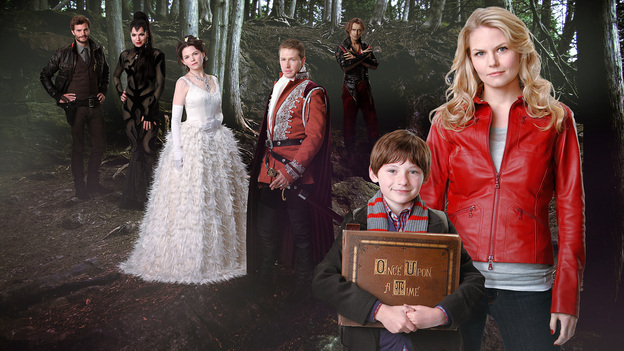
It's hard to know what to think about ABC's Once Upon a Time, because even though I want to like the show, the first few chapters of the story have just missed the mark for me. 

The conceit of the program is that fairy tales are "real" and that the Evil Queen has put a curse upon all the characters that we know and love from the bedtime stories of our youth (Snow White, Cinderella, Jiminy Cricket, etc.). The curse has sent them into "our world" where they are forever stuck in a sad state of limbo, and where none of them have any happy endings -- except of course for the Evil Queen, now the mayor of Storybrooke. 

Enter "Emma" into the tale, who we learn during flashbacks to pre-curse fairy-tale time, is (unbeknownst to her) actually the daughter of Snow White and Prince Charming. Her own son (put up for adoption years ago and not-so-coincidentally now living with his own wicked stepmother -- the mayor) knows the "truth" and tracks Emma down to help rid the town of the curse.


She is skeptical at first, as any normal person would be, but feels compelled to stick around and help her son battle his delusions as well as his oppressive adoptive mother. 

And herein lies the problem with the show... half of each episode is spent in flashback, revealing to us the "true history" of these characters, with fresh spins on the classic tales, such as where Rumpelstiltskin (above) kills Cinderella's fairy godmother in order to take advantage of the naive girl. The rest of each week's hour shows us how these characters' modern-day plights mirror that of their backstory, all the while Emma slowly begins to buy into her son's fantasy.

Now it would have been far more interesting for us to be left in doubt as to whether or not this is indeed a delusion, but that's not how the show decided to play it. Unless the writers are outright lying to us, these are fairy-tale characters. As such, we're left with an interesting world of differently-spun fairy tales combined with a completely separate and somewhat intriguing "soap opera" world of Storybrooke, neither of which have any real stakes involved unless and until the characters themselves all "remember" who they really are... 

Individually, there's a lot of fun ideas being bandied about in both worlds, but in trying to construct a bridge between the two, I'm afraid I'm left unsatisfied. Something just isn't "right" with the balance here. I guess maybe that makes me one of the three bears? If so, Goldilocks can't arrive soon enough to shake me out of my doldrums.

November 15, 2011

John Carpenter - Psychic Director?

Take a closer look at the cult classic film They Live and you can see the footage that most media outlets were forbidden from shooting overnight as the NYPD cleared out Zucotti Park.

November 11, 2011

The Grass Roots Movement Begins!

Ladies and gentlemen... the bar has been set. Who shall be the Sergei Bubka of reviewers to trump this one?  


Challenge... extended.

November 8, 2011

Surviving!


In case you missed it, please click on over to Rob Cesternino's website and take a listen to the fun podcast we did on "How Fantasy Sports Explains Survivor" 


Here's the link: CLICK ME!

Rob C. - the best player never to win

November 3, 2011

And One Fraud to Rule Them All...

Prepare to be amazed? No, I don't reckon I will...
Imagine if you will a reality show competition where, each week, the judges are to eliminate the contestant whose efforts are the least impressive, until only one true champion remains.

Actually, it's not hard to imagine, as these shows are all over the television dial. But what makes The One from Australia an impossible pill to swallow is that none of the contestants actually demonstrate any talent at all in what they're supposed to be talented in.

You see, The One is the search for Australia's Top Psychic, and we're told that the smiling faces in the photo above were chosen for being the best of the best out of hundreds and hundreds of applicants to the program. Now I'm not going to waste time thinking too hard about that last sentence, but how this show actually manages to keep a straight face is beyond me. It's a train wreck!

Through the first three episodes, the contestants have faced some daunting challenges indeed:

  • They were stranded in a forest setting and given 15 minutes to find the rescue helicopter waiting for them a short distance away. (A few did, but most just wandered in circles until time expired.) 
  • They were sent to an apartment and asked to identify the why/how/where of a murder that had taken place inside some time ago. (Many guessed that it was a lover's tiff, but even the few who correctly hinted at a possible strangulation also threw out stabbing and gunshots as the cause of death.)
  • They were asked to study four volunteers and diagnose their "medical maladies." (Rather than actually saying, "You've got a fake leg!" or "You're pregnant!" they spoke in vague generalities like, "You've got a scar or something in the lower part of your body...yes?" and "I see something with the stomach area?")

It's akin to if you had turned on the first episode of the new season of Top Chef and watched as six of the ten cooks burned the dish beyond recognition, two placed inedible meals in front of Padma and Tom, and the remaining two served up some toast.  There's no way you, as a viewer, would be able to, shall we say, "stomach" such a showing. 

I see dead people! 
Of course you do... you're in a cemetery!
Which brings us to the judges: Stacey Demarco, a "respected spiritual practitioner" (whatever that means) and skeptic Richard Saunders, who fights in vain to put some sort of rational spin on the events taking place. It's frustrating, because it is clear that both the editors, as well as the host of the show, are keen to dismiss Saunders as the silly one for not believing.

When a psychic misses and Demarco is asked what she thinks went wrong, it's always couched in terms of "nerves" or "doubting her own abilities" and the host nods and agrees that these are difficult tasks indeed. When Saunders is asked the same question and dares to suggest that maybe the reason that the contestant "misread the energy" in the room is that there is no "energy" there, he's met with eye rolls and mocking tones. "What ever will it take to convince you, Richard?"

I invite you to take a look for yourself here, but my psychic prediction? You won't need to "brace yourself for the impossible" as the show suggests you do before watching. You'll simply be shaking your head in disappointment and disbelief. 

October 21, 2011

Time for TAPS?


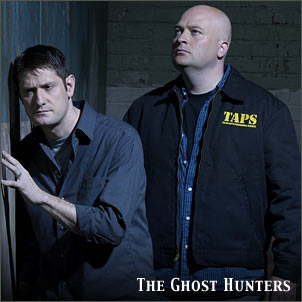
I used to love watching the show Ghost Hunters on television. Now, however, I find the program sadly disappointing. 

It has nothing to do with my views on the existence (or rather, the non-existence) of ghosts and other paranormal activity -- I discuss that topic more in-depth with DJ Grothe of the James Randi Educational Foundation (J-REF) in my book, which can be found here

Look, you don't have to believe in the existence of zombies to enjoy The Walking Dead, for example. But what drew me into Ghost Hunters in the first place was primarily two things: 1) the interesting and engaging personalities of the investigators, and 2) the trust in the evidence that they would present.

As to the first part, I always enjoyed the banter between Steve and Tango as they explored dark passageways on a quest to debunk possible hauntings. Steve's fear of heights, spiders, flying, heck - his fear of everything, it seems, except ghosts - was always good for a laugh. 

It brought a fun spirit (so to speak) to the whole enterprise.

The series' high point, for me, cames when during a live Halloween special, guest-investigator and ECW wrestler, Elijah Burke, suddenly got freaked out and ran off screaming. It was hilarious, and whether or not you believe ghosts are real - his reaction certainly was authentic, and more importantly -- entertaining beyond belief.


Now, though, Steve and Tango's appearances have become few and far between. The new interchangeable batch of investigators is full of bland and unremarkable non-entities. And with none of them distracting me from the "gathering of evidence" I can see even more clearly the cracks that exist in that department.

When the show first started, the evidence consisted primarily of grainy video and EVPs - recorded audio that when played back seems to have captured spooky, otherworldly responses to questions that were not heard "live" by the investigators. 

While there's plenty of room for interpretation of these images and sounds, at least the audience at home can actually see and/or hear them. Sure, the conclusion that there is no other explanation for these things save for the supernatural is not one I'm on board with, but at least I can concede it remains a "possible" explanation, however unlikely. 

But over the years, new devices have been brought into the mix -- tools such as the K-II meter (seen below) which TAPS claims will measure variation in the EMF field in a room. They'll ask questions to a ghost they believe to be in a room and when the meter's lights move, they present it as proof that the ghost is responding to them.


Of course, that might hold some water if there was any scientific basis for believing that when a ghost talks (and we'll assume for the sake of argument that ghosts exist at all and that the meter itself does what they say it does) that by so doing, the EMF in a room is somehow affected. But there really is no reason to make any connection between the two things. 

It would be like me, sitting in my house, watching my cat raise his paw at random non-specific intervals and to conclude that it must be being caused by the inter-dimensional mice that are trying to manifest themselves into our universe. Correlation is not causation. It's all "woo."

Now add to that an annoyingly loud soundtrack that makes it impossible to ever hear the sounds that the investigators claim they are reacting to, along with the need (for dramatic reasons) to always investigate in pitch darkness, even when the claims by homeowners frequently state they've seen apparitions while eating lunch in full sunlight...

Oh, TAPS. I'm afraid... I'm afraid our time here is done. On to the next one...